A More Versitile Tangram Puzzle
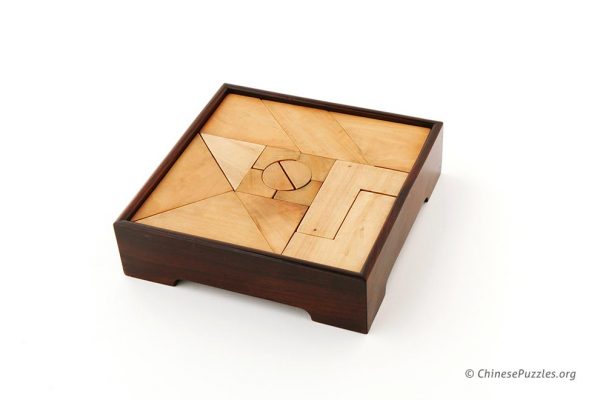
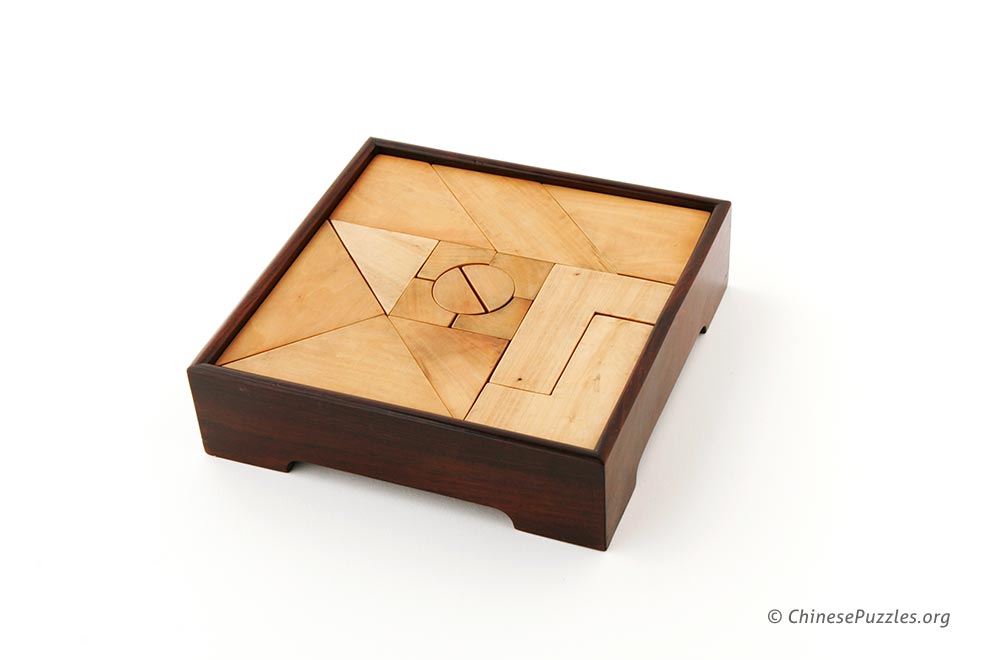
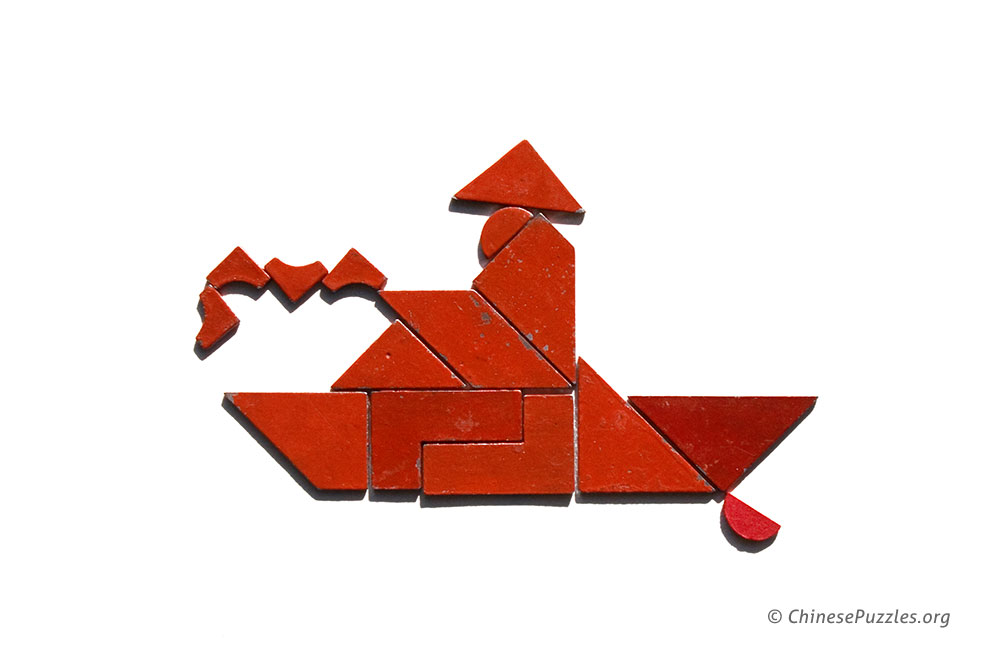
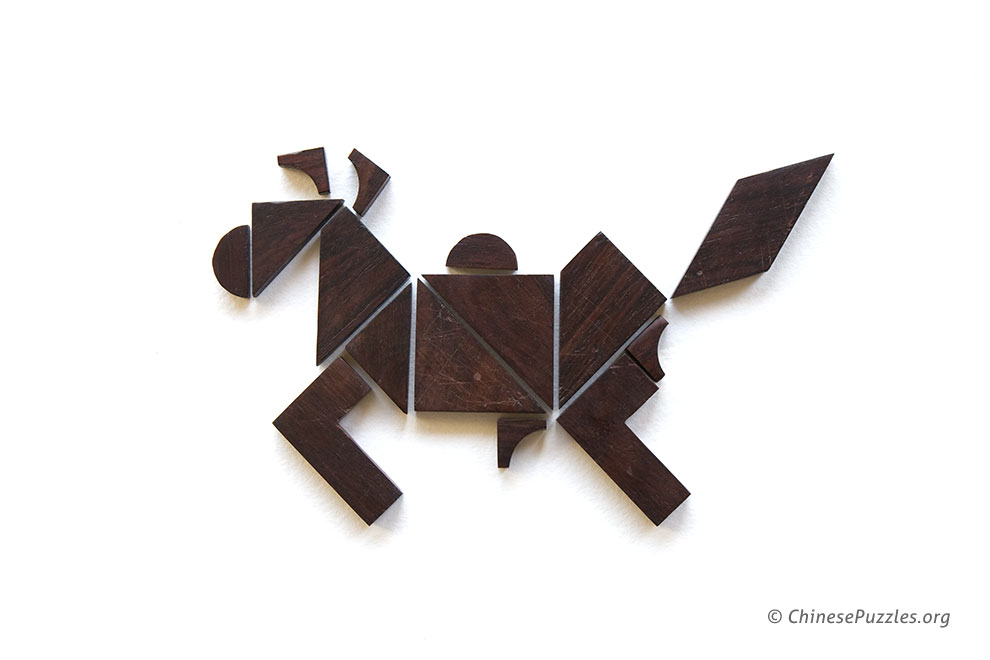
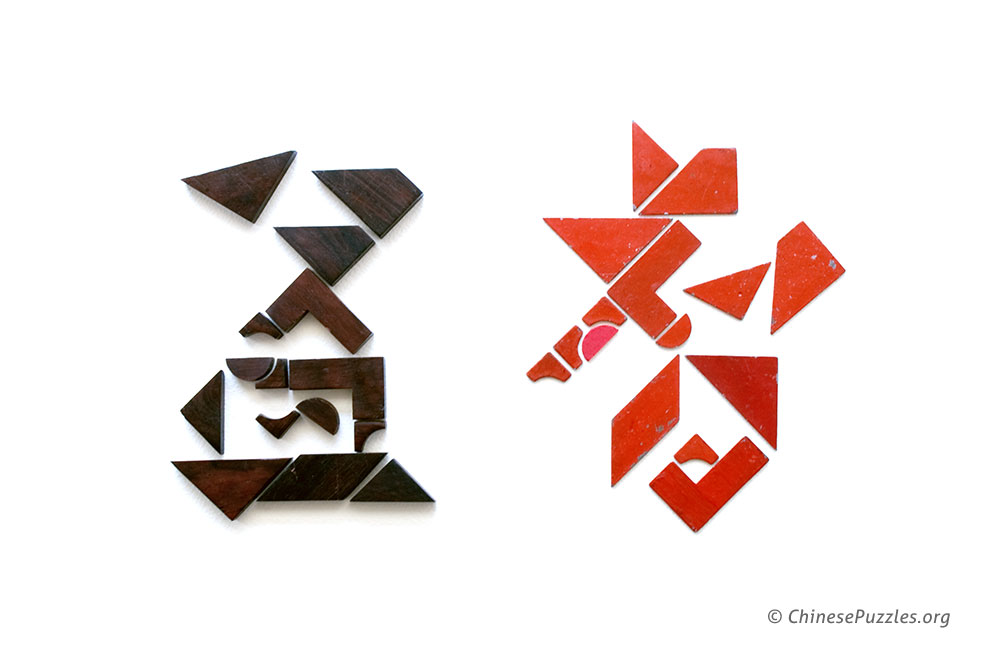
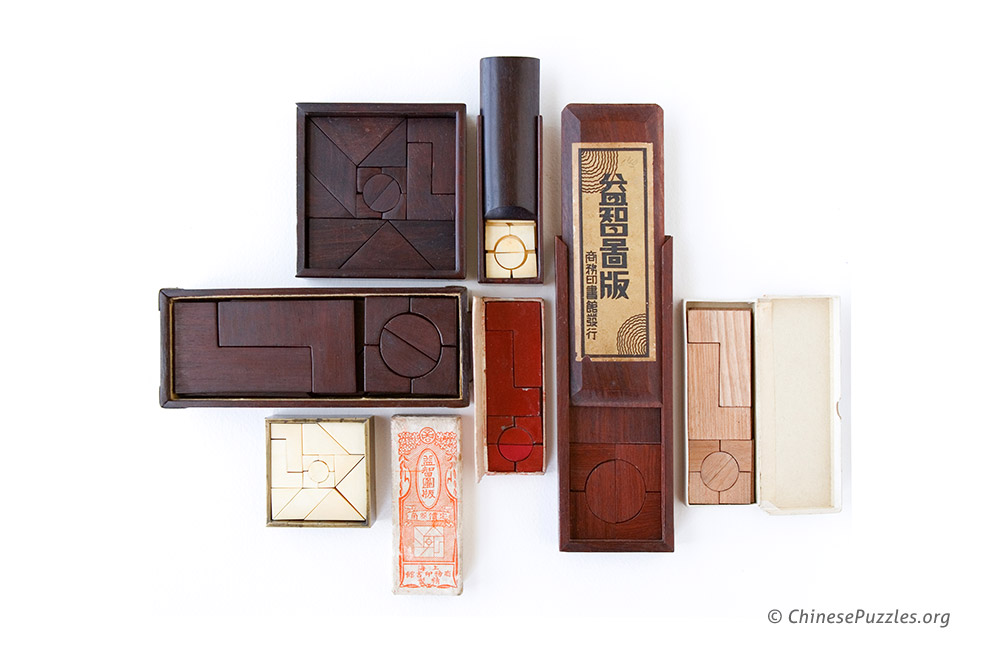
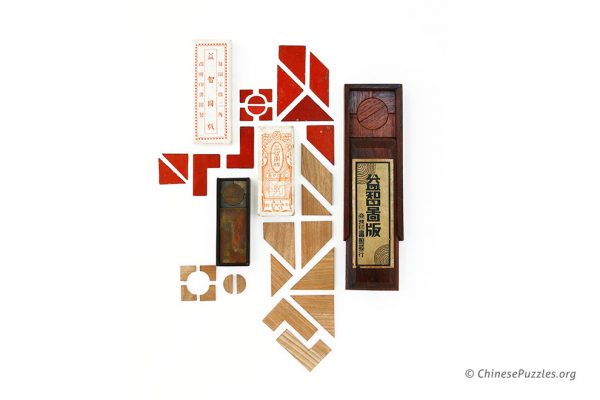
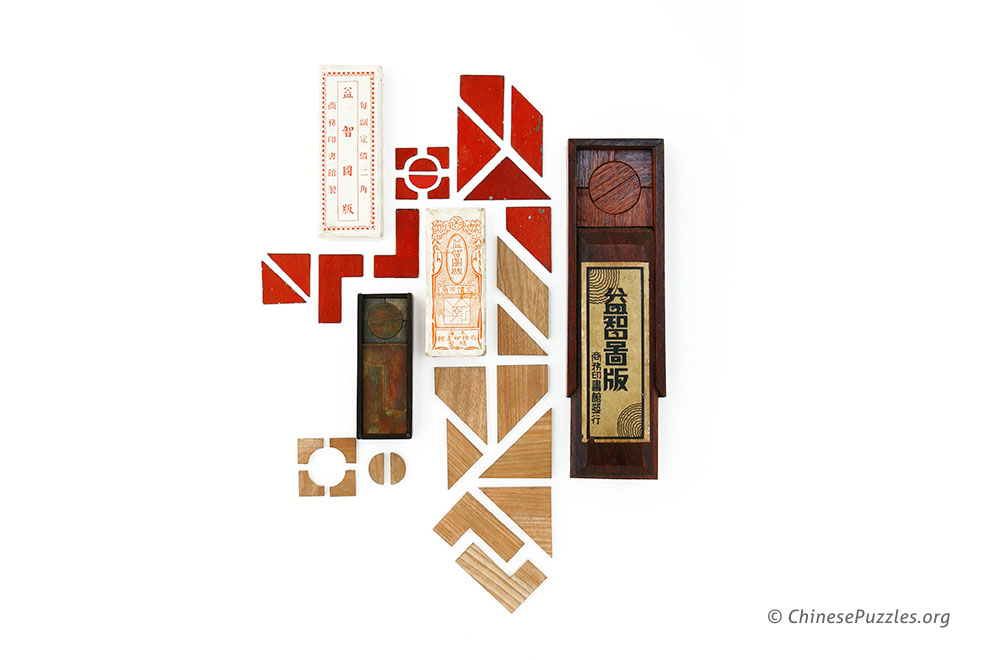
Unlike banquet tables, butterfly tables, and the seven-piece tangram, Tong Xiegeng’s fifteen-piece construction set contains pieces with curved edges.
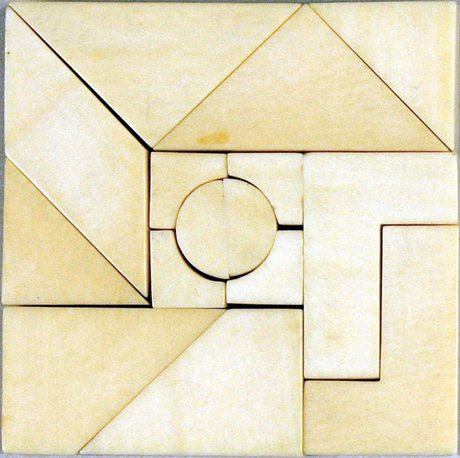
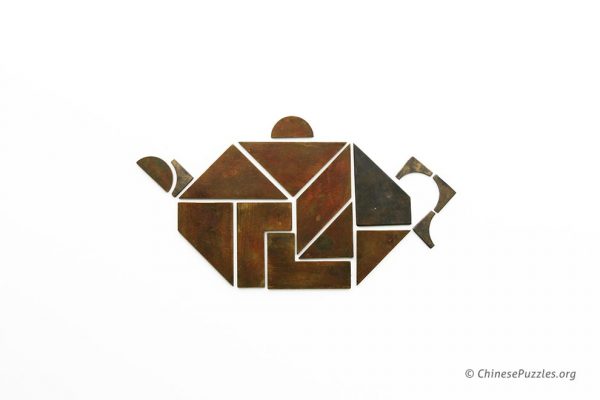
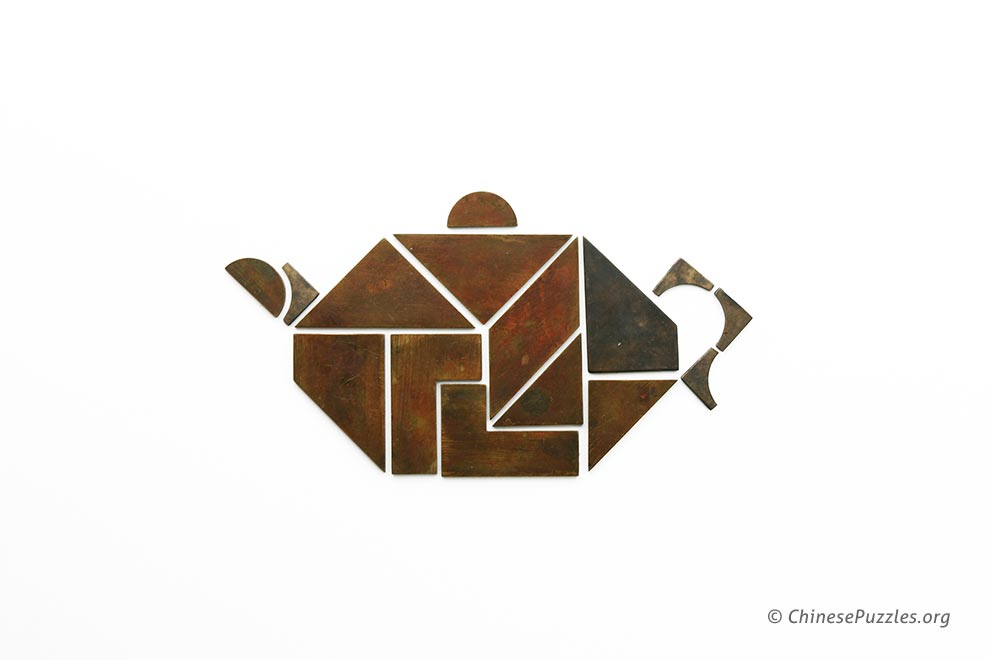
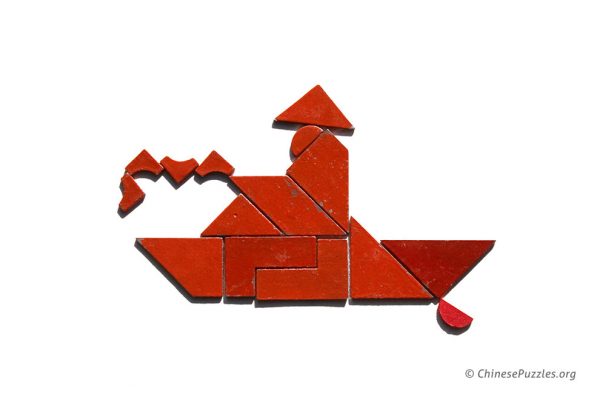
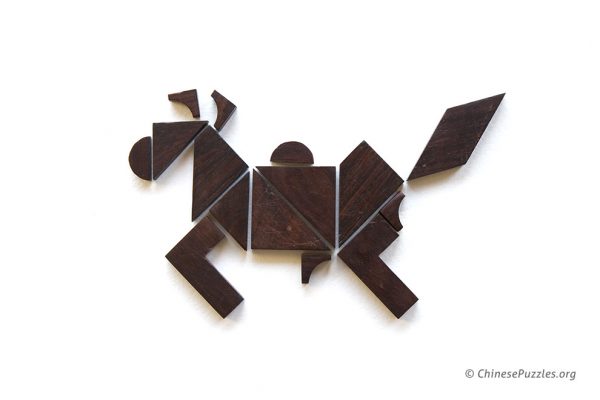
The larger number of pieces, including the six curved pieces, gives the fifteen-piece tangram puzzle greater versatility than its predecessors and makes it possible to construct more accurate images of objects, animals, people, scenery, and even Chinese characters. Making use of his knowledge of poetry, literature, calligraphy, and painting, Tong Xiegeng formed arrangements of the pieces to illustrate passages from classical literary texts.
Tong Xiegeng based his fifteen pieces on the doubling number sequence 1, 2, 4, 8 of the Book of Changes, with the numbers in this sequence physically represented by one parallelogram, two semicircles, four corners, and eight polygonal members of pairs that make up the set. The sum of 1, 2, 4, and 8 is, of course, 15.
Tong Xiegeng’s Diagrams
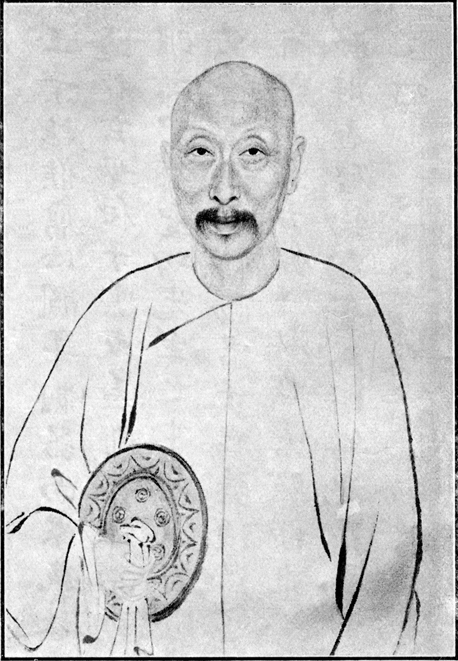
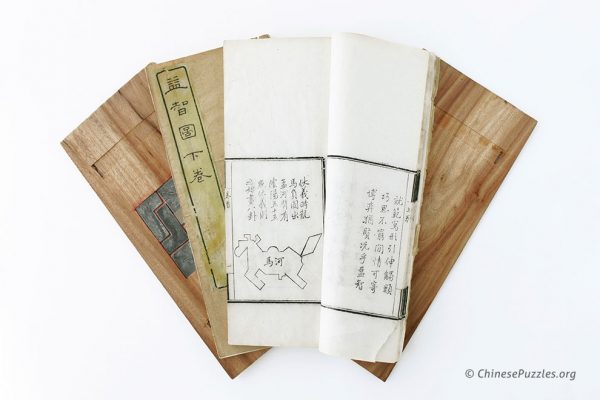
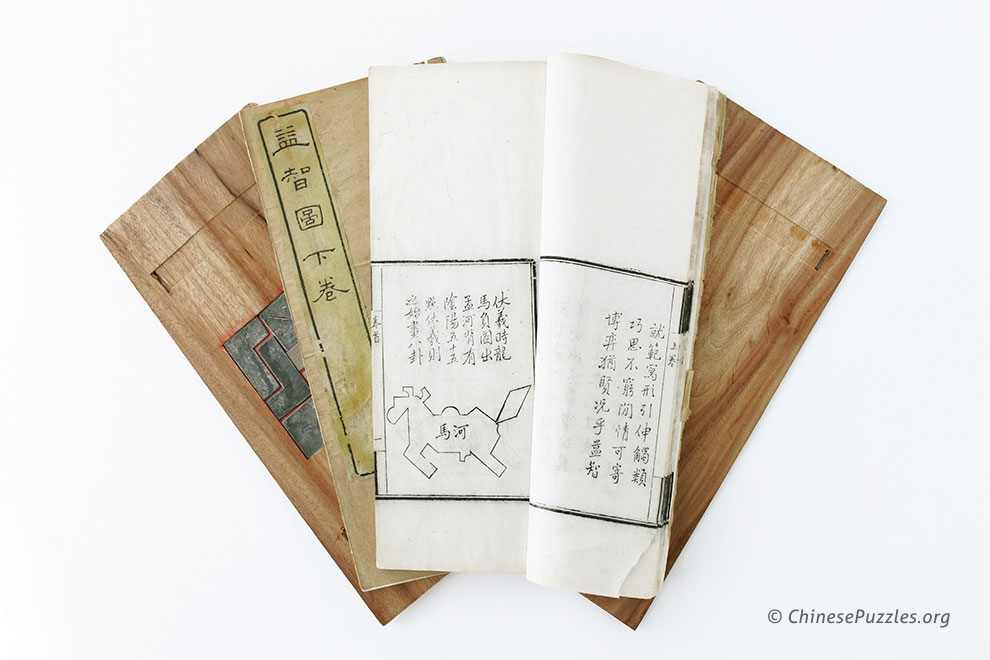
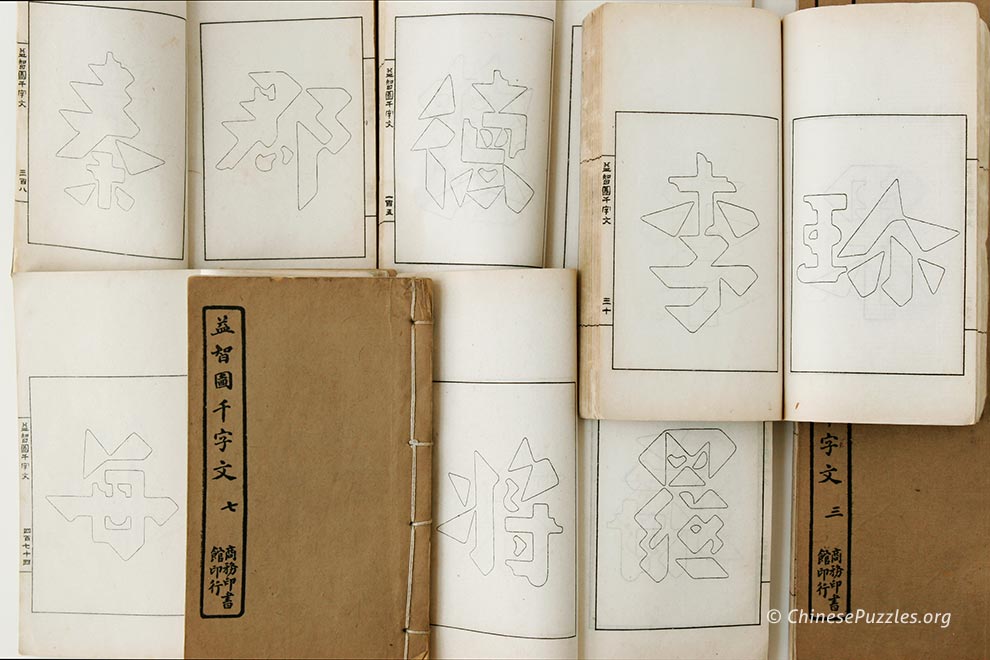
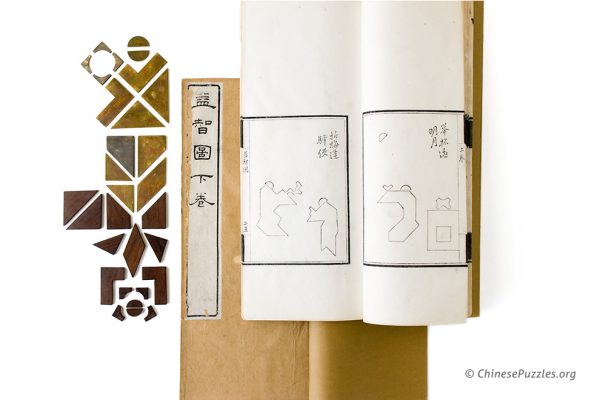
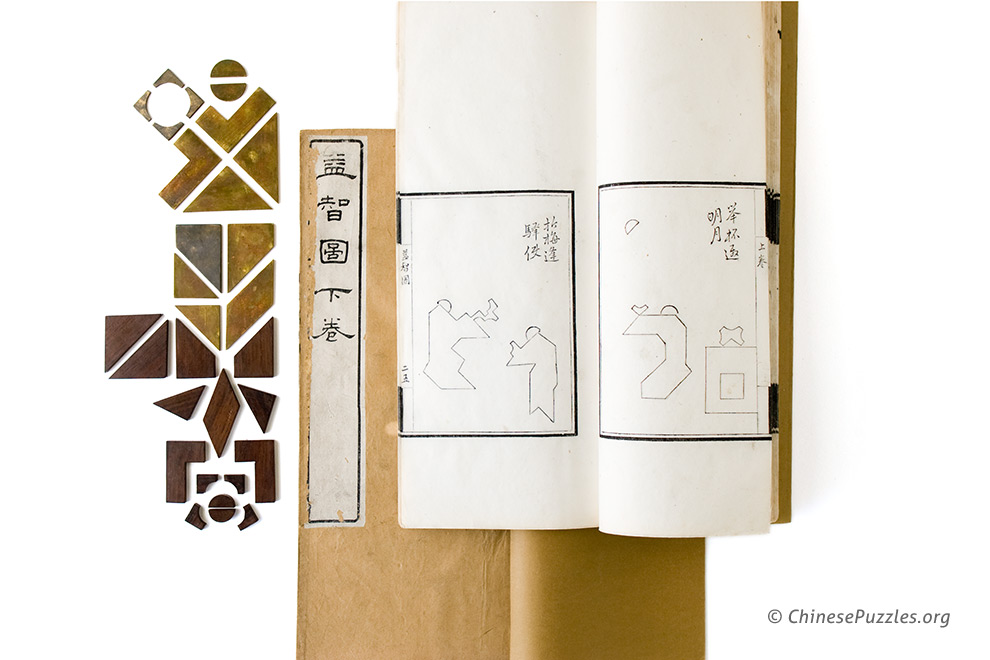
In 1862 Tong Xiegeng finished writing the first draft of his two-volume Enhancing Intelligence Diagrams (Yizhi tu 益智图). The first volume contains outlines of elegant fifteen-piece puzzle constructions illustrating passages from poetry and classical writings. The second volume has outline illustrations of scholar’s objects and several Chinese characters along with poetic descriptions.
Enhancing Intelligence Diagrams was published in 1878 and enjoyed great success. However, Tong Xiegeng received stinging criticism from some individuals who looked down upon his work and stated that his talent would be better spent on traditional scholarly pursuits than on “trivial things.” In 1880 Tong Xiegeng answered his critics in a statement entitled “Undoing the Ridicule,” in which he argued that his fifteen-piece tangram puzzle “provides a new means of entertainment for people of intelligence and girls from well-to-do families.” Tong Xiegeng concluded by defiantly stating, “I will not study those established arts, following in the dust of others and picking up the spit from other people’s talk.”
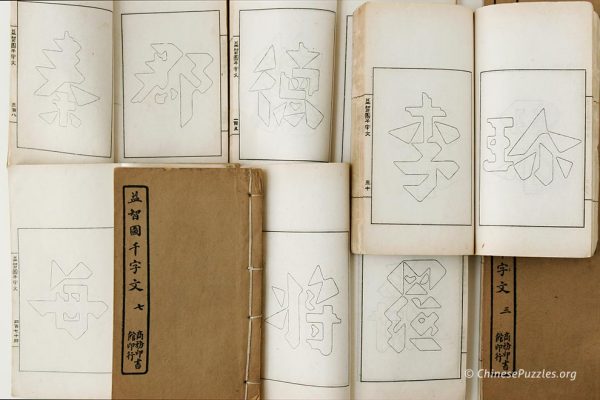
The following pages are from Tong Xiegeng’s Enhancing Intelligence Diagrams:
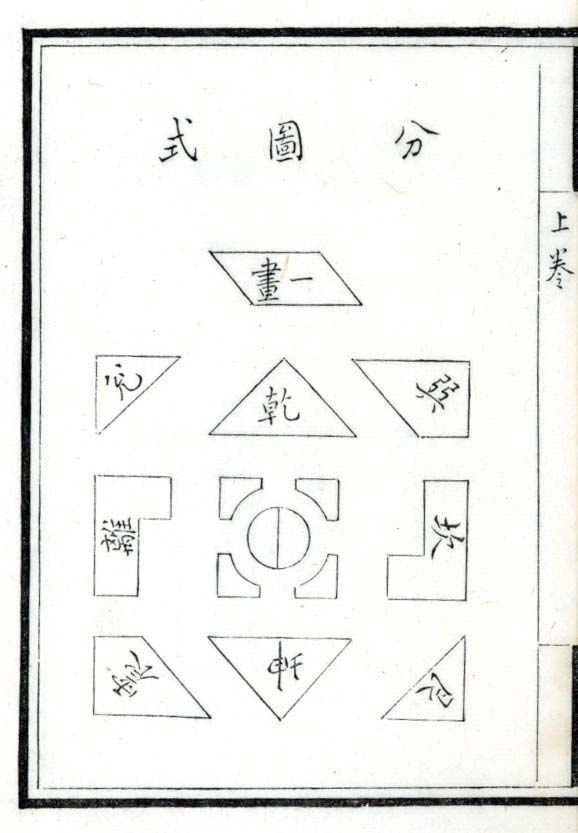
4 corners, and 8 polygons
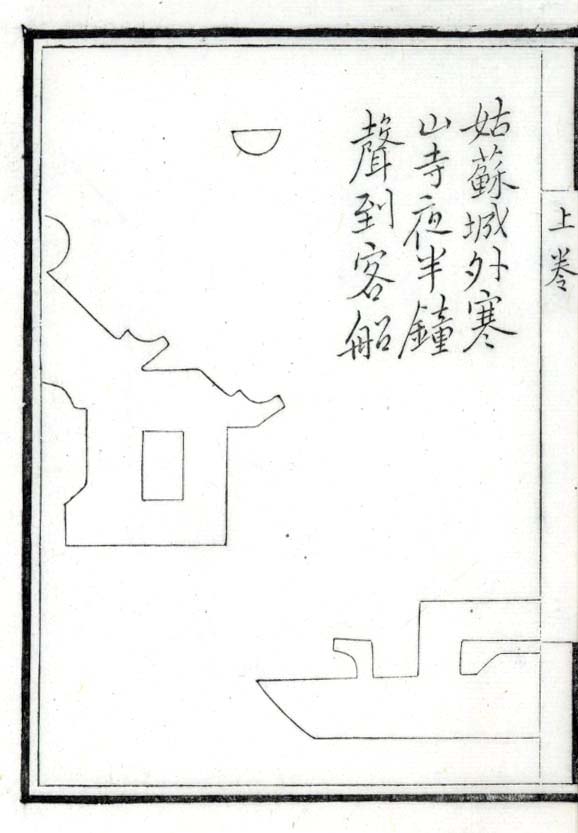
in Suzhou
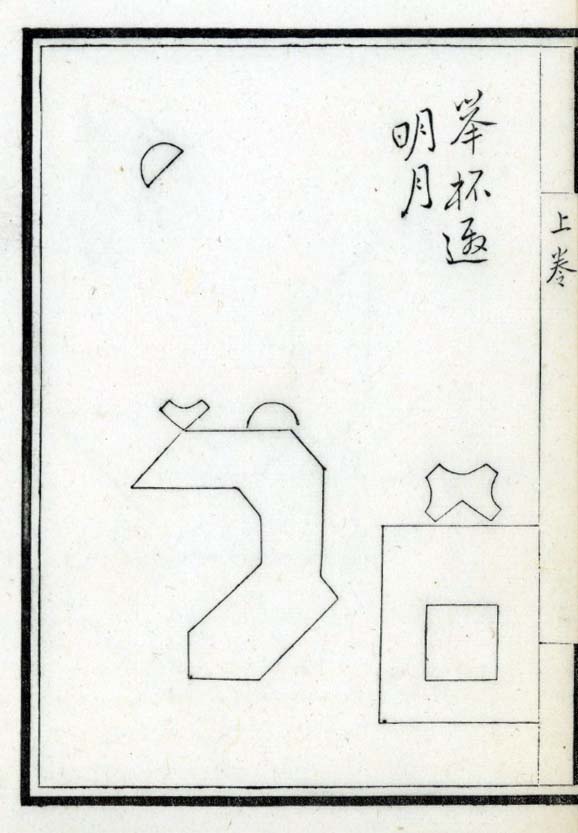
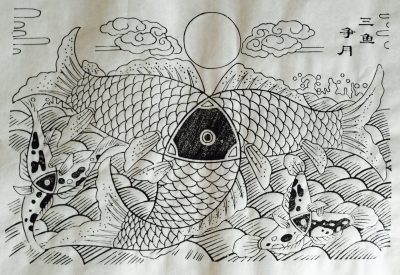
I toast the moon”
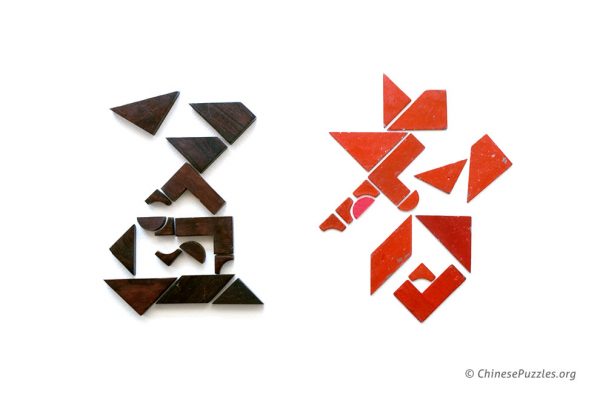
In 1885 Tong Xiegeng published two more volumes of fifteen-piece puzzle constructions, Additional Enhancing Intelligence Diagrams. The second of these volumes has diagrams of Chinese characters to construct using the fifteen pieces. Evidently, this volume proved to be very popular, because after its publication Tong Xiegeng embarked on his most ambitious project—using the fifteen pieces to form each of the characters in the Liang dynasty (502–557) classic literacy primer Thousand Character Essay. He completed this project in 1892 with the publication of Enhancing Intelligence Diagrams of One Thousand Characters.
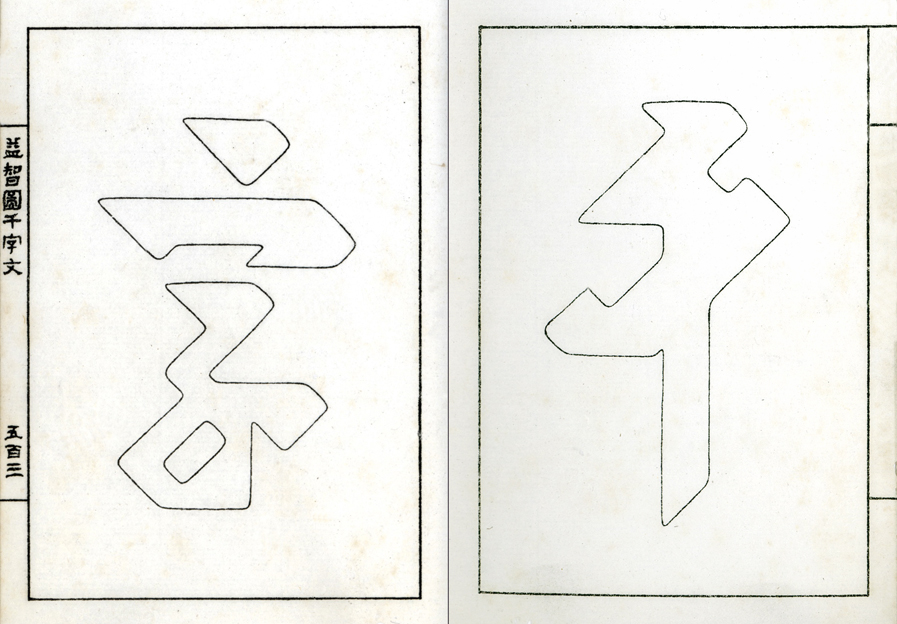
The fifteen-piece tangram puzzle and its use to portray so many aspects of Chinese culture was essentially the work of one man, Tong Xiegeng. If the banquet tables, butterfly tables, and seven-piece tangram are considered to be the first three generations of Chinese geometrical shape-making puzzles, then the fourth generation must surely be Tong Xiegeng’s fifteen-piece tangram puzzle.
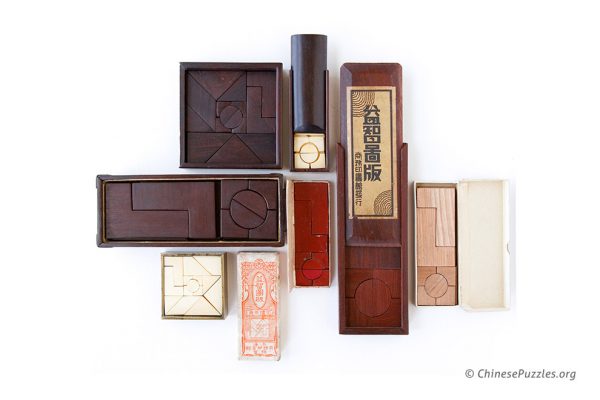
Tong Xiegeng died in 1899, but his fifteen-piece tangram puzzle books continued to be extremely popular. His son Tong Danian assumed responsibility for publication of his father’s works and began a long relationship with Shanghai’s Commercial Press, the largest publisher in Asia. Tong Xiegeng’s books were in such great demand that Commercial Press reprinted a six-volume collection year after year and also produced sets of the fifteen pieces to accompany the books. However publication of Tong Xiegeng’s books ceased in on January 29, 1932, the day Japan bombs destroyed the huge Commercial Press building along with its entire library.
Although Tong Xiegeng’s fifteen-piece puzzle never achieved the worldwide fame of the seven-piece tangram, it does live on. One great-grandson preserved the family’s collection of Tong Xiegeng’s books that survived China’s war with Japan, the civil war, and the Cultural Revolution. And another great-grandson runs a web site with an online version of the fifteen-piece tangram.
The Fifteen-Piece Tangram in the Imperial Household
In addition to its popularity among scholars and school children, members of the imperial family also enjoyed the fifteen-piece tangram puzzle. The American missionary and teacher, Isaac Taylor Headland (1859–1942), wrote, “It is a toy for children, a puzzle for grown folks, but it is used by all classes, from the dowager princesses to the little boys and girls in the homes of the common people.”
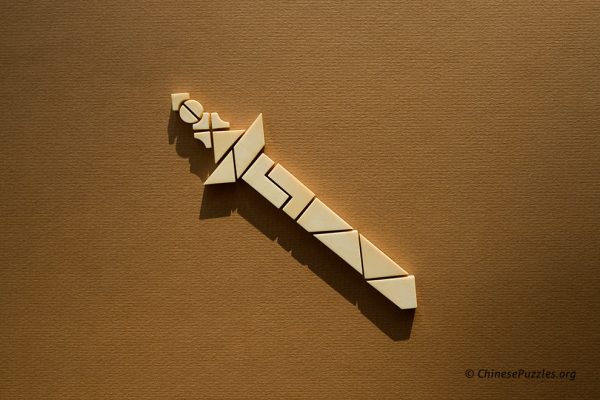
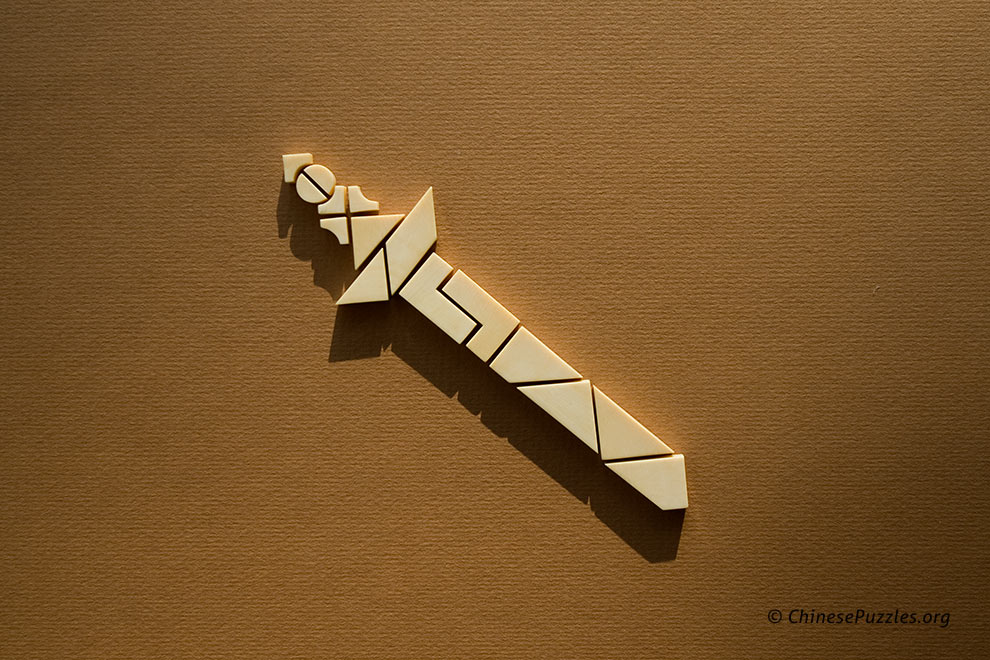
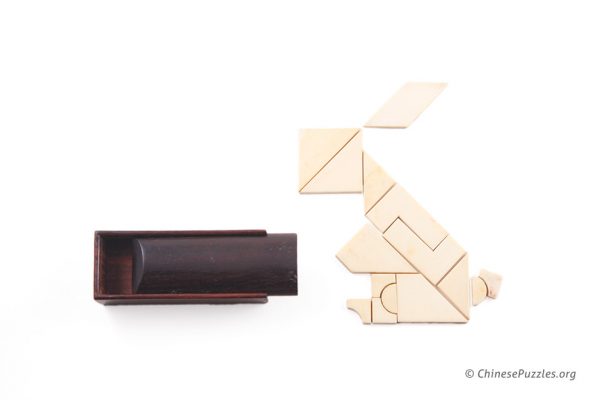
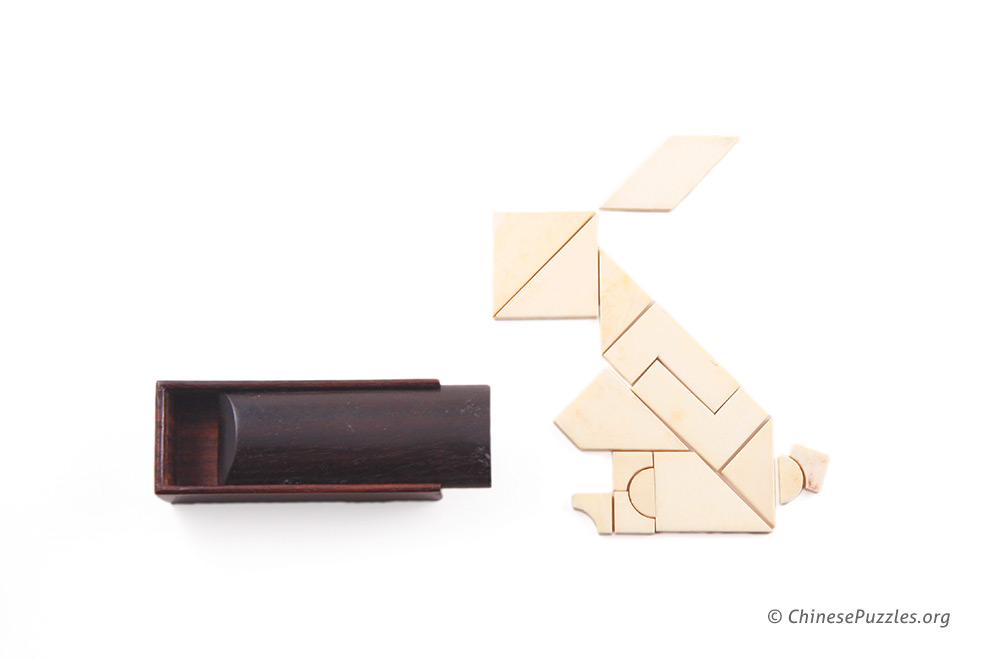
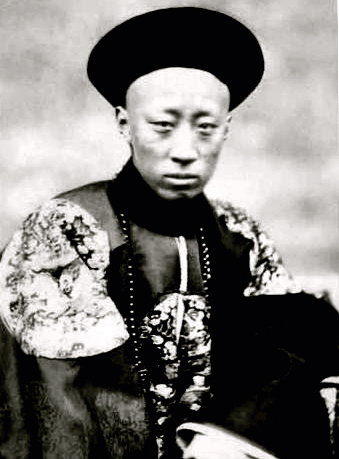
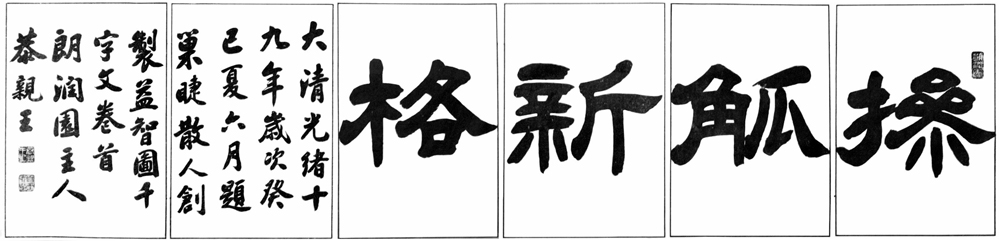
Prince Gong (1833–1898), the sixth son of the Daoguang Emperor (reigned 1821–1850), was in charge of China’s foreign affairs from 1861 to 1884. Prince Gong was a fifteen-piece tangram aficionado and owned a set of small, perfectly formed ivory pieces in a brass box with a sliding lid. In 1893 he wrote an inscription in Tong Xiegeng’s Enhancing Intelligence Diagrams of One Thousand Characters.
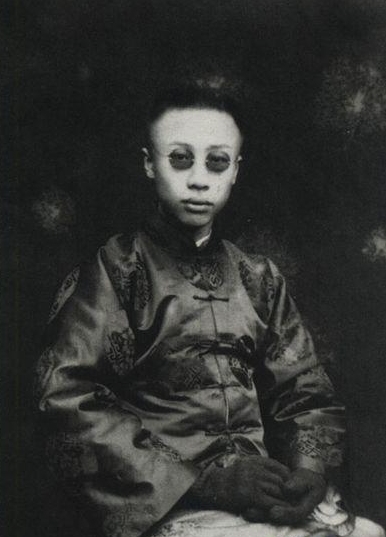
Pu Yi (1906–1967), the last emperor of China, played with the fifteen-piece tangram puzzle during his childhood in the Forbidden City. His set, which remains in the Forbidden City is not at all fancy and could very well have come from a nearby department store or bookstore.
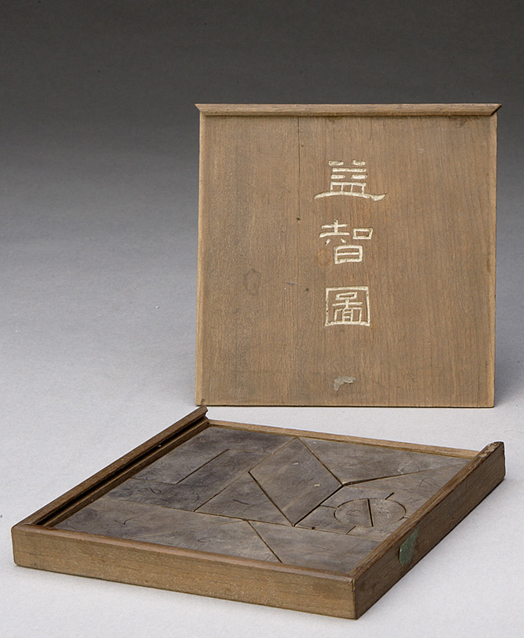
Courtesy of The Palace Museum, Beijing
The fifteen wood pieces are arranged in a square wood box with a sliding lid. Painted in white on the lid are the characters 益智图 (enhancing intelligence diagrams).
The Forbidden City also has a six-volume set of fifteen-piece tangram puzzle books with a set of small pieces inset into its cardboard case. These books were published in 1897 and are still in the palace’s library, although the cardboard case is now full of wormholes and the fifteen original pieces have been replaced by crude wood copies.
Read More
Peter Rasmussen, Wei Zhang, and Niana Liu. Zhongguo chuantong yizhi youxi (Traditional Chinese Puzzles). Beijing: Sanlian Shudian, 2021. See pages 190–225. In Chinese.